206 Greenfield Drive, Suite B
El Cajon, CA 92020
Drying Your Car the Right Way After a Wash Without Damaging the Paint
Most car owners think washing is the hard part. Soap, scrub, rinse, done. But the real damage happens after — when you're standing there with a dripping vehicle and no plan. Water spots aren't just cosmetic. They etch into clear coat. And if you're dragging the wrong towel across wet paint, you're carving swirl marks into every panel.
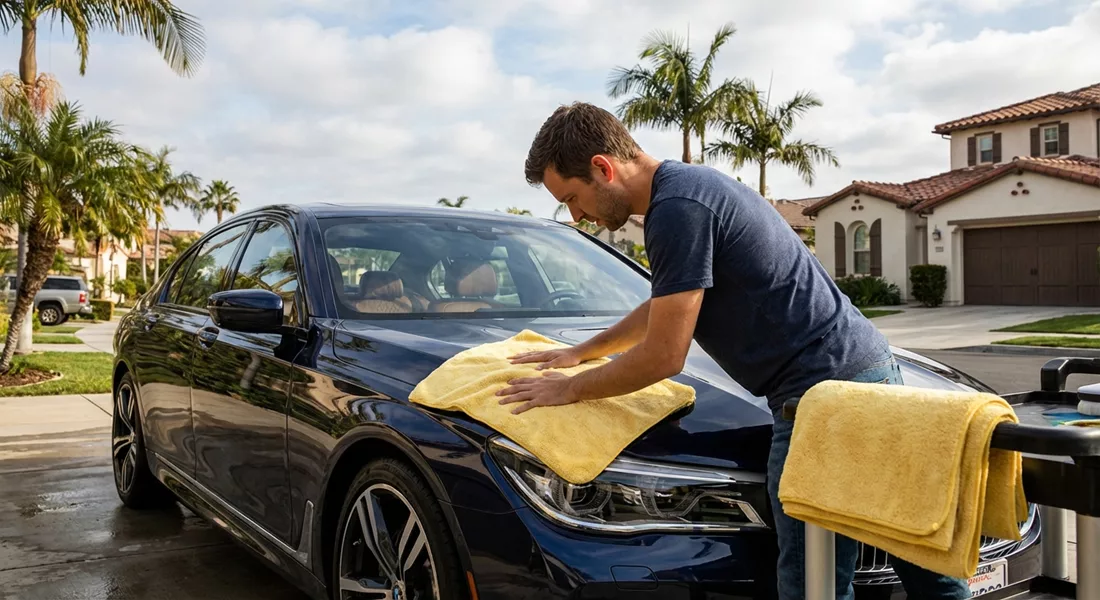
So here's the reality. If you're putting in the effort to wash your car, don't blow it in the final step. Every droplet left behind is a potential problem. Every tool you grab matters. And every move you make should be grounded in protecting the finish — not just getting the job done fast.
Water Spots Don't Just Sit There
When water evaporates off your paint, it leaves minerals behind. Calcium, magnesium, whatever's in your tap or hose — it all stays on the surface. Those white rings and cloudy patches aren't dirt. They're deposits. And if you let them bake in the sun long enough, they bond to the clear coat.
We've seen cars that looked flawless after a wash turn into a mess within an hour. All because the owner assumed air drying was fine. It's not. The longer water sits, the worse the outcome. And once those spots set in, you're looking at paint correction or worse just to undo what a towel could've prevented.
Your Towel Choice Makes or Breaks the Finish
Grab the wrong fabric and you might as well be using sandpaper. Old bath towels, kitchen rags, even some cheap microfiber — they all carry risk. Lint, rough fibers, embedded grit from the last use. Any of that can scratch paint, especially when you're applying pressure.
Here's what actually works:
- Microfiber drying towels designed for automotive use — soft, plush, and absorbent enough to soak up water without dragging
- Waffle-weave towels that pull moisture into the fabric instead of pushing it around
- Dedicated car dryers or blowers that eliminate contact entirely and push water out of crevices
- Chamois only if it's high-quality synthetic — natural chamois can trap particles and scratch
- Multiple towels on hand so you're never reusing a saturated or dirty one
Blotting Beats Wiping Every Time
Dragging a towel across paint creates friction. Friction picks up whatever's on the surface — dust, pollen, leftover soap — and grinds it in. That's how swirl marks happen. That's how you end up with a finish that looks dull under direct light.
The smarter move is blotting. Lay the towel flat on the panel, press gently, and lift. The fabric absorbs the water without sliding across the surface. It's slower, sure. But it's also the difference between a mirror finish and a scratched-up mess. And if you're using a quality microfiber, you won't need much pressure anyway.
Top to Bottom Keeps Water From Winning
Start at the roof. Work your way down the windows, then the hood, doors, trunk, and finally the lower panels. Gravity's on your side here — water flows downward, so drying from the top prevents you from re-wetting areas you've already finished.
And don't skip the crevices. Mirrors, door handles, emblems, trim pieces — water hides in all of them. If you don't pull it out, it'll drip down later and leave streaks on panels you thought were done. A smaller towel or a blower works best for tight spots. We've seen people use compressed air too, but make sure it's filtered or you're just blowing dust onto wet paint.
Shade and Timing Aren't Optional
Drying in direct sunlight is asking for trouble. Heat accelerates evaporation, which means water spots form faster. It also makes the paint surface hot, which can cause quick detailers or drying aids to streak or haze.
Park in the shade or wait until the sun's lower. If you're washing in a garage, even better. And if you just rinsed the car, don't wait around. The longer water sits, the more minerals settle. Get to drying within a few minutes of the final rinse, and you'll have a much easier time keeping the finish clean.
Where Most Car Owners Go Wrong
Letting the car air dry is the most common mistake. It's tempting — just walk away and let nature handle it. But nature doesn't care about your clear coat. You'll end up with spots, streaks, and a finish that looks worse than before you washed.
Using dirty or contaminated towels is another fast track to scratches. If that microfiber hit the garage floor, it's done. If it's been sitting in the trunk for months, it's done. Always start with a clean towel, and inspect it before you use it. One piece of grit is all it takes.
And then there's pressure. Pushing down hard doesn't dry faster — it just increases the chance of marring the paint. Let the towel do the work. If it's not absorbing, you need a better towel or a drier one, not more elbow grease.
Tools That Actually Deliver
If you're serious about protecting your paint, a touchless drying method is worth considering. Car dryers and blowers push water off the surface without any contact. They're especially useful for:
- Mirrors and side trim where water pools
- Grilles and vents that trap moisture
- Wheel wells and undercarriage areas
- Convertible tops or soft surfaces that shouldn't be rubbed
- Freshly waxed or ceramic-coated finishes where you want zero friction
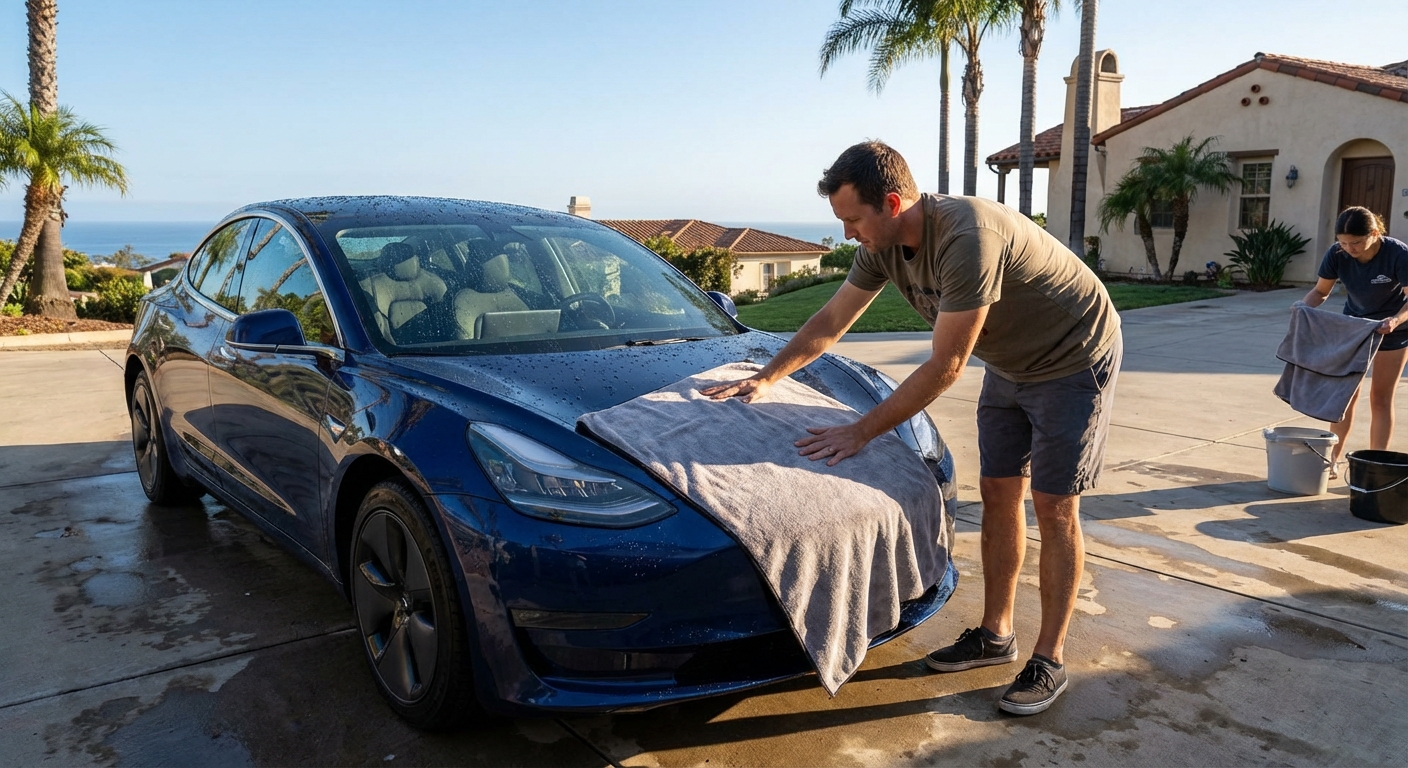
Quick Detailers Add a Layer of Safety
Spraying a quick detailer as you dry isn't required, but it helps. The product adds lubrication, which reduces friction even further. It also enhances gloss and can fill in minor imperfections left behind by washing.
Just don't overdo it. A light mist per panel is enough. Too much and you're just creating more work for yourself, wiping off excess product instead of drying water. And make sure the detailer is compatible with any ceramic coating you've applied — some formulas don't play well together.
What Happens When You Skip the Details
Ignoring the small stuff adds up. Water left in door jambs drips out when you open the door. Water in the fuel door runs down the quarter panel. Water around the license plate leaves streaks. All of that undoes the work you just put in.
We've also seen people forget about the wheels entirely. Brake dust and road grime mix with water, and if it dries on the wheel face, it's harder to remove later. A quick wipe-down with a dedicated wheel towel keeps them looking sharp and prevents buildup.
Consistency Beats Perfection
You don't need to spend an hour drying your car. But you do need a system. Same tools, same process, same attention to detail every time. That's what keeps the paint in good shape over the long haul. For those looking to maintain a ceramic coated car looking clean, proper drying techniques become even more critical.
Drying isn't glamorous. It's not the part of detailing that gets attention. But it's the part that separates a clean car from a protected one. And if you're already putting in the effort to wash, there's no reason to cut corners when the finish line is right in front of you. Understanding what you should do before getting your car ceramic coated includes mastering these fundamental washing and drying techniques. Professional detailing services can also help establish the right foundation for long-term paint protection. If you're in the San Diego area and want expert help maintaining your vehicle's finish, consider reaching out to specialists who understand how San Diego's salt air can wear down your car's paint. At the end of the day, your paint only looks as good as the care you put into every step — and drying is where that care either shows or falls apart.
Let’s Keep Your Car Looking Its Best
We know how much effort goes into keeping your car spotless, and the right drying technique makes all the difference for a flawless finish. If you want to protect your paint and enjoy a shine that lasts, let’s work together to make it happen. Give us a call at 619-750-7070 or get a free quote—we’re ready to help you keep your car looking its absolute best, every time you hit the road.
‹ Back
Recent Posts
-
Can Ceramic Coating in San Diego Help Preserve Resale Value?
September 8, 2026
-
How Often Should You Wash a Ceramic-Coated Car in San Diego?
August 25, 2026
-
Is Ceramic Coating in San Diego Good for Daily Drivers?
August 11, 2026
-
-
Is Your Black Car in San Diego Hard to Keep Clean?
July 14, 2026
NEVER WAX AGAIN,
BOOK WITH US TODAY
Your investment deserves to be preserved with best-in-class ceramic coating California drivers trust for finish protection.


Site by