
206 Greenfield Drive, Suite B
El Cajon, CA 92020
Can Ceramic Coating in San Diego Help Protect Against Bird Droppings?
Most San Diego drivers think bird droppings are just a cosmetic problem. Something you wipe off and forget about. But that acidic mess sitting on your hood is doing more damage than you realize — especially when the sun gets involved. Ceramic coating services might seem like overkill until you understand what's actually happening to your paint. Then they start looking a lot more necessary.
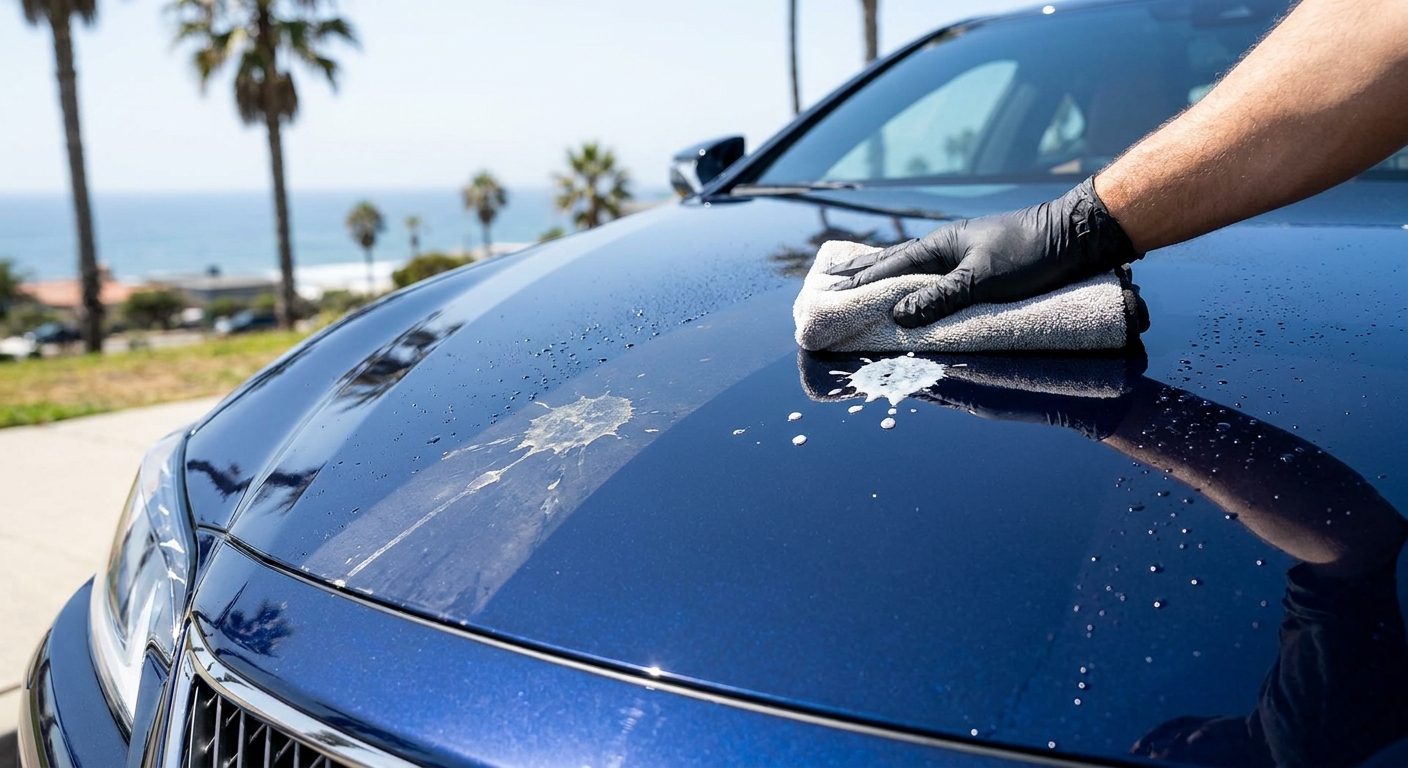
Droppings aren't just sitting there. They're eating through your clear coat. And if you're not treating your paint like the investment it is, you're asking for etching, staining, and a repair bill that could've been avoided. Every coating has limits, but the right one buys you time — and that time matters more than most people think.
What Ceramic Coating Actually Does
Ceramic coating isn't wax. It's not something you slap on every few months and hope for the best. It's a polymer that bonds with your factory paint and creates a hydrophobic shell that repels water, dirt, and contaminants. Once it cures, you've got a semi-permanent layer that stands between your paint and everything the environment throws at it.
The real value shows up in how the surface reacts. Water beads off. Grime slides away. And when something corrosive lands on your car, it hits the coating first — not the paint underneath. That buffer zone is what makes the difference between a quick cleanup and permanent damage.
Why Bird Droppings Are Worse Than You Think
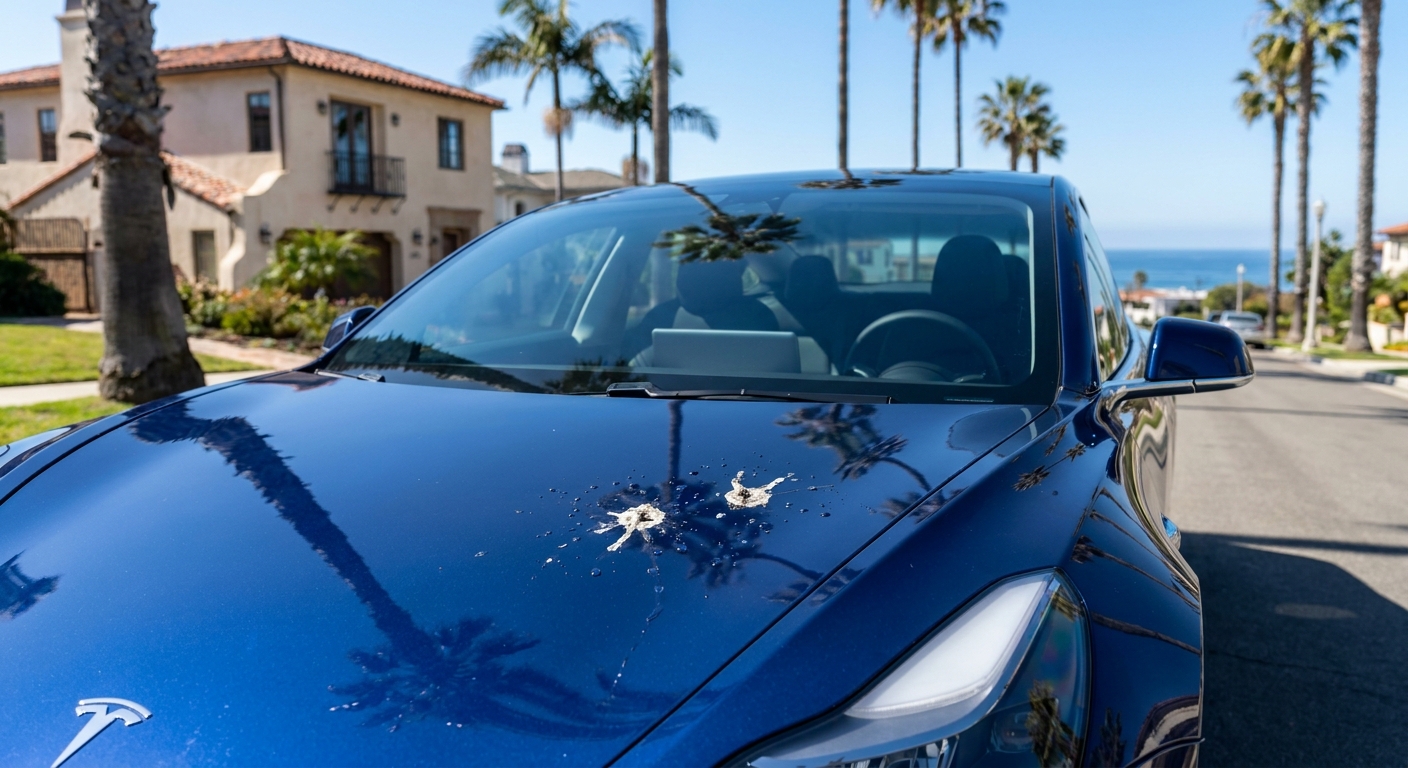
Bird droppings carry uric acid with a pH that hovers between 3 and 4.5. That's acidic enough to break down clear coat and start etching into your paint within hours. In San Diego's heat, that timeline gets even shorter. The sun bakes the droppings into the surface, turning what should've been a simple wipe-down into a stain that won't budge.
Most people don't realize the damage until it's too late. By the time you see the mark, the acid has already eaten through the protective layer. And once that's gone, you're looking at repainting or buffing — neither of which is cheap. The issue isn't just frequency. It's exposure time and temperature, both of which work against you in Southern California.
How Coating Slows the Damage
Ceramic coating doesn't make your car immune to bird droppings. It makes the surface harder to penetrate. The droppings land on the coating, not the paint, which means the acid has to work through that barrier before it reaches anything permanent. And because the coating is hydrophobic, the droppings don't bond as tightly. They sit on top, which makes removal faster and safer.
That slick surface also reduces the chance of scratching when you clean. Without a coating, wiping off droppings can drag debris across your paint and leave micro-scratches. With it, you've got a smoother cleanup and less risk of collateral damage. The coating doesn't stop the problem — it just gives you a better fighting chance.
Where Coatings Fall Short
Even the best ceramic coating has a breaking point. Leave droppings on long enough, and the acid will eventually punch through. That's especially true when heat accelerates the breakdown. The coating buys you time, but it's not a free pass to ignore maintenance. You still need to clean your car regularly, and you still need to act fast when you spot contamination.
Not all coatings are built the same, either. DIY kits from big-box stores don't perform like professional-grade products applied by trained detailers. If you want real protection, you need real application. Cut corners on the coating, and you'll cut corners on the results. San Diego has no shortage of detailers who know what they're doing — use them.
What We Do to Keep Paint Protected
- Park in covered areas whenever possible, especially near trees or coastal zones where bird activity is high
- Inspect the car after every outing and address droppings immediately with a pH-neutral cleaner and microfiber cloth
- Invest in a professional ceramic coating from a reputable San Diego shop, not a spray-on bottle from a chain store
- Reapply or maintain the coating according to the manufacturer's schedule to keep the hydrophobic layer intact
- Avoid using abrasive tools or harsh chemicals that can degrade the coating faster than the droppings ever could
When to Recoat or Refresh
Ceramic coatings don't last forever. Depending on the product and how well you maintain it, you're looking at anywhere from two to five years of solid protection. After that, the hydrophobic properties start to fade, and contaminants begin sticking more easily. If water stops beading or droppings leave marks faster than they used to, it's time for a refresh.
Some shops offer maintenance coatings or toppers that extend the life of your original application. These aren't full recoats, but they restore the slickness and bring back that protective edge. If you're serious about keeping your car in top shape, schedule an inspection every year or two. Waiting until the coating fails completely defeats the purpose.
Why Professional Application Matters
- Trained detailers prep the surface properly, removing contaminants and correcting paint defects before coating
- Professional-grade products bond stronger and last longer than consumer kits
- Application technique affects coverage, thickness, and cure time — all of which impact performance
- Warranty and support come standard with most professional jobs, giving you recourse if something goes wrong
- Shops in San Diego understand the local climate and can recommend coatings suited to heat, salt air, and UV exposure
Cleaning Without Compromising the Coating
Speed matters, but so does method. Scrubbing bird droppings with a rough towel or using harsh chemicals can strip the coating just as fast as the acid would. Instead, we soak the area with a pH-neutral cleaner or distilled water, let it sit for a minute, then lift the droppings away gently with a microfiber cloth. No pressure, no scrubbing, no drama.
If the droppings have hardened, don't force it. Re-wet the area and give it more time to loosen. The coating is working for you, but only if you don't work against it. Patience in keeping your ceramic coated car clean protects both the coating and the paint underneath. Rush it, and you'll undo the protection you paid for.
Protection Starts Before the First Drop Lands
Ceramic coating in San Diego isn't a magic shield. It's a smart layer of defense that makes the inevitable easier to handle. In San Diego, where sun, salt, and seagulls are constants, your car needs more than a wash and wax routine. It needs a surface that fights back against the elements — and that starts with the right coating, applied the right way, and maintained without shortcuts.
We've seen too many cars with etched paint and faded clear coats because the owner thought they could skip protection or wait until damage showed up. Understanding what to do before ceramic coating and learning facts about ceramic coating can help you make informed decisions. By then, it's too expensive to fix and too late to prevent. Get ahead of it. Coat your car, keep it clean, and treat every day in the sun like the test it is. Your paint will thank you, and your resale value will prove it.
Let’s Protect Your Car the Right Way
We know how frustrating it is to see bird droppings threaten your car’s finish, especially in San Diego’s sun. Let’s make sure your paint stays flawless and your investment is protected for the long haul. If you’re ready for real protection and expert care, call us at 619-750-7070 or get a free quote today and let’s get your car the defense it deserves.
‹ Back
Recent Posts
-
-
Is Your Black Car in San Diego Hard to Keep Clean?
July 14, 2026
-
-

-
NEVER WAX AGAIN,
BOOK WITH US TODAY
Your investment deserves to be preserved with best-in-class ceramic coating California drivers trust for finish protection.


Site by